Table of contents Toc Icon
Table of contents Toc Icon
Managing remote accounting teams is no longer just about enabling flexibility. Firms face growing concerns around data security, inconsistent processes, and a lack of visibility into team performance. At the same time, employees expect the freedom to work from anywhere without compromising productivity or work-life balance.
Firm leaders often question how they can maintain control without disrupting efficiency. What approach ensures security, clarity, and performance while managing distributed accounting teams?

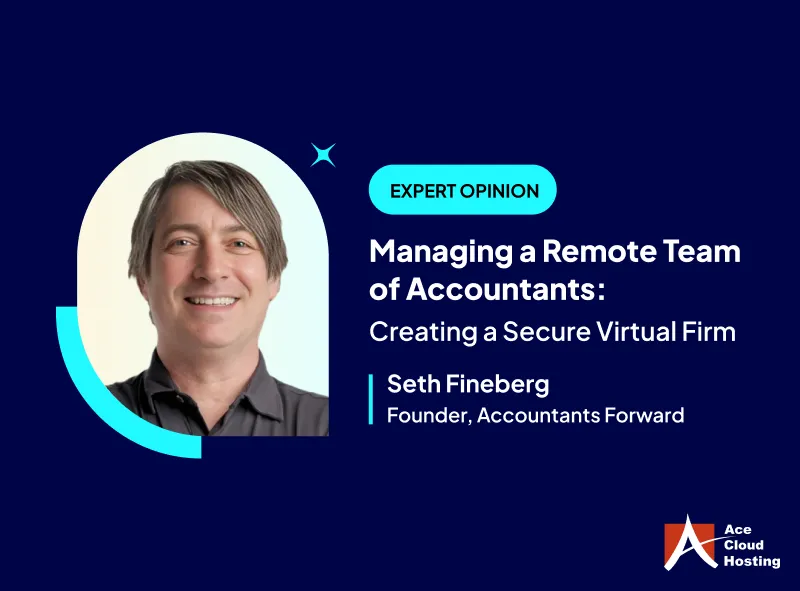
Ace Cloud Hosting spoke with Seth Fineberg, founder of Accountants Forward and an accounting industry consultant, content strategist, and speaker. With over 30 years of experience observing the profession’s evolution, Seth has seen firsthand how firms are reshaping their services to stay relevant and responsive to client needs.
In this expert Q&A, Seth explains why remote work is now essential for accounting firms, what a secure and efficient setup looks like, common mistakes firms must avoid, and how leaders can create clarity, accountability, and balance for distributed teams.
Why has remote work become such an important capability for accounting firms today, rather than just a temporary convenience?
It is something that has been coming, even since before the pandemic, when so many accounting professionals, once all in the office, had to work from where they were. While culturally some firm leaders do see the benefits of an in-person/in-office dynamic, the fact is: life.
People are increasingly wanting to put life first, and life doesn’t always allow for being physically in an office. They want to work how they want to work and having that balance for your valued staff is essential to retaining them. If you enjoy the work and how you do it, you have a better chance of retaining the talent you’ve invested in.
What does a strong remote accounting setup look like from a technology and process perspective?
From all of the accountants I speak to about this, it really does depend on what you prioritize. For security, having a VPN or being in some kind of hosted, managed service type of environment, you can more securely work on whatever tools you require.
And of course, anything accessible via cloud/browser that allows you to access what you need, particularly with your clients as well (where applicable). From a managerial perspective, you often want tools that can keep track of productivity as well.
How should firms define expectations, so remote employees know exactly what success looks like?
That very often is either a 1:1 conversation or written policies. It’s an agreement, if you will, on how work is done, what deadlines and goals are, and who decides. Ultimately, the more transparent you are about your own expectations and definitions of “success”, defining KPIs and so forth, the smoother things will be, the less tension or miscommunications there will be.
What are the biggest security mistakes firms make when supporting work-from-home teams?
At this point, we’re in the second quarter of the 21st century, and if you are still working in ways that you did 25/30 years ago by attaching files to emails, sending info in any sort of unsecure way, you are going to struggle and put your business (and potentially your clients) at a greater risk.
Data security and file sharing policies have to be clearly defined from Day 1 and updated regularly. Following basic human protocols, too, about what is a legitimate email, what isn’t, and if there’s any question, there’s a hard and fast rule about that. In short, guessing, not knowing, and assuming about what you think is secure is one of the biggest mistakes that can be made.
How can leaders help remote employees maintain balance, especially when home life is busy and distracting?
I’ve actually had these types of discussions recently, because everyone needs peace of mind and knows what expectations are. For example, there’s a firm I know with 80+ staff, all of whom are remote. They need to maintain culture as well as all of the above, so team leaders have regular check-ins, and there are often IRL meetups that get organized, as well as virtual ones.
You can also set up best practices to help ensure there is a balance between home and work life. Knowing what outcomes are expected can go a long way to managing those expectations and keeping everyone on the same page, no matter where you work from.
What does it take to manage remote accounting teams securely and efficiently?
Managing remote accounting teams requires more than enabling access from anywhere; it demands a structured approach to security, clear expectations, and the right technology. Seth Fineberg emphasizes that firms that prioritize secure environments, define success clearly, and foster consistent communication will be better equipped to maintain control, protect client data, and support team productivity in a remote setup.
At Ace Cloud Hosting, we provide secure managed services, including hosting accounting applications such as QuickBooks, as well as providing fully managed virtual desktops, managed IT services, and AI-powered cybersecurity services. Our goal is to help teams work smarter, collaborate effectively, and stay prepared for the future accounting trends.
How are you ensuring security and efficiency while managing remote accounting teams? Share your thoughts in the comments.