Table of contents Toc Icon
Table of contents Toc Icon
Real estate accounting is no longer just about keeping the books in order. Firms today are managing a far more complex environment shaped by multi-entity portfolios, property-level reporting demands, compliance pressure, and clients who expect faster insights and better visibility.
Traditional workflows often fall short in this setting, leaving teams burdened by manual processes, disconnected systems, and limited scalability at a time when efficiency and accuracy matter more than ever.
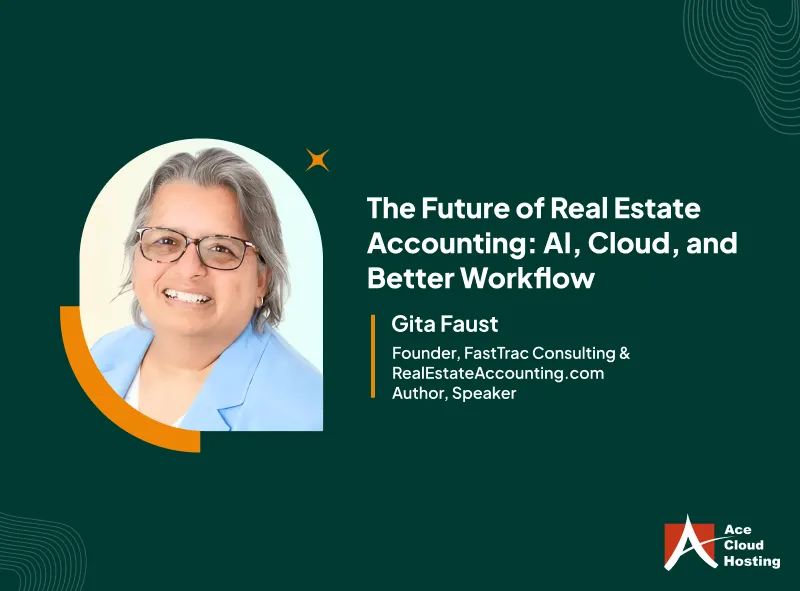
That is exactly what Ace Cloud Hosting explored in its webinar, “Real Estate Accounting in the AI Era: Adapt or Fall Behind.” In this session, Gita Faust, Founder of FastTrac Consulting and RealEstateAccounting.com, and Seth Fineberg, Founder of Accountants Forward, shared practical perspectives on how real estate accounting differs from traditional accounting and why that distinction matters more than ever.
The discussion covered the key challenges firms face around reporting complexity, compliance, and changing client expectations, while also examining how AI is helping improve collaboration, streamline workflows, and support scalable growth.
The webinar also highlighted the modern tech stack real estate accountants should consider, including accounting, practice management, security, AI, and productivity tools, along with the role of QuickBooks Enterprise with cloud access in supporting multi-property management, reporting, and collaboration.
Transcript
Seth: All right. I think we’re at the top of the hour now. If you’re coming in from other places. Good morning or good afternoon to you, depending on where you are today. All I know is you’re with us. And if you are here, you are here. You’re definitely in for a treat.
We’re going to be digging into a bit of the niche and, you know, such as it is, of real estate accounting, particularly in the era of AI. Today’s theme is, you know, adapt or fall behind. It’s an interesting time in accounting overall. But an area like real estate is something that, today’s guest speaker, Gita Faust, is very well-versed in.
So, a little bit of background on her, coming up. But in today’s discussion, we’re going to be hitting a lot of different things. So definitely stay with us.
- Changing landscape of real estate and accounting.
- Practical use cases of AI.
- How to use it to possibly build the ultimate tech stack for growth.
- Unpacking QuickBooks Enterprise.
That’s another, you know, specific, you know, area tool that you would, you know, definitely use features, you know, that pertain to real estate. The strategic advantage of hosting QuickBooks Enterprise in the cloud is that, in the end, we’re definitely going to be able to answer a bit more of your questions, but please feel free to ask questions throughout this webinar.
So a little bit about our guest here, Gita Faust. I’m not going to go through every single bullet point here. But Gita has a unique story, which, you know, I think she’ll touch on in a bit. You know, she kind of was in accounting and bookkeeping, and you know, how to run a practice, and really needed to kind of balance her life.
You know, things happen in life. You want to be able to work and also support your family, you know, deal with life issues that come your way. So, Gita was not only able to do that with her practice, but also really dug in to and developed a very successful niche in real estate accounting. With all the tools and tricks that go with it.
As for me, who’s this other talking head here? I’m Seth Fineberg. I founded a content marketing and PR consultancy called Accountants Forward. Why? Because I genuinely want to see the accounting profession move forward. So, I work with companies, like Ace Cloud Hosting and some others, to, you know, help put content into the market that, you know, really develops a better connection to the profession.
And, the folks who are, you know, building the platforms and the tools and the services that help you in your everyday life. And then, of course, our host today is Ace Cloud Hosting. Please stick around towards the end of this webinar. Right at the end, there’s going to be a very special offer from Ace Cloud Hosting, which does everything from, you know, application hosting to, more importantly, managed security solutions, desktop servers, managed IT services, and everything in between, a great partner to have.
So why don’t we jump right to it now? We want to just before we kind of get to, you know, Gita and you know, all the things that she has to present today. I want to get to our first poll of the day just to get to know you all.
So, if you want to take a moment, we can launch the first poll. A way to get to know our audience a little bit better today. So please click the one that applies to you if you’re a CPA, accountant, bookkeeper, accounting firm, owner, partner, again, you might be one of the other. But if you’re, you know, an owner or a partner, a real estate account specifically, that would be cool to know.
A property accounting lead, CFO, finance controller, or other. Just want to find out who you all are. Joining us today. And thank you for taking the time out of your day to do so. We’ll leave the poll open for a couple more seconds. Okay. Let’s have a great reveal here. Find out who is with us today, Gita.
Okay. Awesome. Mostly, you know, CPAs, accountants, and bookkeepers. And we have a couple of folks in real estate accounting as well. Excellent. Pleased to meet you. So, without further ado, Gita, take it away.
Gita: Hello, everybody. Thank you, Ace Cloud Hosting, and Seth, for inviting me to share my experiences and insights about the industry as much as I can. Right. So, of course, we are going to talk.
What is real estate accounting? You know, when you have a website, and you see that white space in between. That’s also called real estate. Can you believe it? That was funny. I learned that from a web designer a couple of years ago. I said, what is all that white space you put between sections, saying it’s called real estate.
I said, “That’s interesting”. So, I’ll tell you one of the jokes later on. Okay. But, so real estate is where all the money is, where people can build their equity, right? And investors can leverage their existing properties as well to acquire more properties. So where do we start?
You know, in the real estate landscape, it’s so broad. You know, you can be an agent. You can be a broker. You can be servicing a real estate investor or a property manager. They may be from various segments of the real estate industry. You know, they may be from short-term rentals. They also call vacation rentals, you know, multifamily commercial rentals where they have the triple net. Lease escalations, and so forth. And then you have the storage units, HV Units, ADU, and the list keeps going on.
So where do you focus? What is the go-to niche that you want to develop to help your clients? Or if you’re an investor, you know, where you stand in the real estate broad criteria of segmentations. So, what are the key points? The key points are always different depending on each business because that is what defines the service we provide to the client.
Each client is unique. How are they unique? If they’re using an app, it’s they’re using an app the same workflow. And the procedure goes for using the app. Right. That’s only one part of the puzzle. But the second part of the puzzle is their back office. If you don’t learn the ins and outs of their back office, we cannot take the next step of helping our clients.
The real estate pros, as I call them. And let’s take, for example, one of the clients with whom Intuit did a case study with me. They interviewed me and one of my clients, who started with only a couple of properties as an investor, and they grew so fast that they depended on their bookkeeper and their CPA to do the taxes.
They ended up paying approximately $150,000 taxes in partnerships, not for the partnerships, but individually. And they said there’s no way because we did not make that much money. So they came to me. We did a big clean-up, and they were flipping. They had a syndication, and they had rentals and mixed-use property.
So, mixed-use is where you have a commercial rental on the bottom. On the first floor, the second floor, or the third floor, you have residential units that are rented out. So that’s mixed use. So eventually, when we came down, they went back. It took us like a year and a half to get everything sorted out because it was not only one or two properties.
And we were doing this all in QuickBooks desktop. And they did not want to spend more money on apps, which we were fine with, as long as we knew what software we were using. Most of the time was spent learning their backstories, their stories that they were told about each and every property they acquired, with their crazy stories and crazy deals.
I call it crazy, but it’s not literally crazy. It’s unique to us. When we sit and get on the phone and talk to them, right. If it’s all done virtually, if it’s all done just by email and, you know, by making notes, you don’t get the full story. So when we started doing the cleanup job, those stories, the ones I called crazy deals, they make, are very important because that’s how you show the equity on their balance sheet and their profit and loss.
So I will ask Ace Cloud Hosting to share that case study that Intuit did for us, but so what, makes it unique, right? Each industry, along with real estate, is unique because of all the segmentations of the industry in real estate. Right. So, like I mentioned all this, you know, agents, it’s simple.
It’s like if you’re offering a consulting service, it’s just a consulting service, right? It’s easy, but as they grow, you need more in-depth reporting. You need to tell them what they need to track to see what each sale costs them. What was their bottom line for that sale?
For each property. So that’s very important. And with all the examples and what I’m going to be talking about, you will find little nuggets everywhere. What is unique about real estate versus general accounting?
Seth: Excellent. Moving on to our next poll. I know we’ve a lot to dive into. It would be great to get a sense also of, you know, folks who might, you know, have this kind of background. So, I’m wondering if the folks who are attending today primarily work with real estate or property-based clients?
So just kind of pick whatever one here applies to you. Again, we realize that some of you might be just very interested in diving into this niche. That’s totally okay. Answer truthfully here. The majority of your clients are in real estate. No, but only a portion of them are. No, but I’m exploring the niche, and not currently.
You know, this is one of the reasons why we’re here. And by the way, keep, keep your own questions coming in. I’ve got a couple already that, you know, in the, in the chat. So we’re going to get to those a bit later. But they’re, they’re pretty good.
So, I hope you’re ready, Gita. All right. I’ll find out. So, we already got, you know, some colleagues in here. You know, some folks, you know, maybe digging in, but they haven’t quite, you know, only a portion of your clients. But we have a few folks here already. A majority of their clients are in real estate.
Excellent. Well, you know, Gita, you know, you’ve an interesting story, too, about what attracted you to it. I don’t know if you wanted to spend a minute on that. And I know we have to go into the just kind of, you know, you know, I think it’ll help flow into how it’s changed.
Gita: All right. So how did the landscape change in my world? But landing in the real estate niche, right? Yeah. So, I started my business part-time job, as you all know. And eventually, a client walked in the door, who was the biggest client at that time. And he was a real estate agent. He literally forced me. So, if you don’t go to a real estate association meeting with me, I am going to drop you as my service provider.
I’m like, that’s not possible. And he knew it, that he was one of the biggest, because I was doing everything part-time. I went in there, and I fell in love with everybody. This was, what, 20 years ago, approximately. And everybody gravitated towards me. Not just because of my beauty, but because of the service that I provided.
And since then, I have developed a niche slowly. My first guide, which I wrote for the two-day session, I provided, with the computers and bring your own data, was a ten-page guide only. And since then, the books are almost 600 pages and more, but going back, that was my little story how I got started. I was literally pushed into it. And I thank that client to this day, whenever I see him, because he’s local.
So, how is the landscaping changing in the real estate accounting industry? Right. That’s what we are talking about. And it all varies.
Is the accounting different for each type of category of the property, like multifamily, commercial, you know, storage units? Yes, it is right. And all those need to be kept track of.
Now, when we say 27.5 years, we are talking about depreciation. That’s the first thing that comes to mind for us CPAs, accountants, and bookkeepers. Right. So, what I’m saying is, do you need to know all that unless you are a tax preparer or a tax strategist? Then yes, you need to know which property is depreciated at what rate.
But when it comes to accounting, you need to classify those properties accurately on the balance sheet. So, the tax preparer or the tax strategist can advise your client accordingly. So that’s why I say it is required. And a lot of Excel sheets you need to keep in. Sometimes data can be kept in the accounting software or a third party software that you can pull up the information right away.
Now the metrics that we need to is how we keep track of the data. Right? And the data has to be more detailed than what your clients want. Because as you know, it’s the same concept as the construction industry. We are going to apply the same concept from job costing to unit costing. Mind you, I did not say property costing.
I’m saying unit costing. Right. So that unit costing bundles up to your property, you know, levels up. So, it’s important to keep track of your net income, your EBITDA to, you know, interest before taxes, depreciation. You need to have all those levels of metrics in there. And that’s only kind of a derived if you keep track of your books, the way the client and the tax strategist would help your client to the next step, right?
So, when it comes to trust accounting, many states in the US have mandated that they have to keep a separate bank account for escrow accounts, even if your state does not require it. I 100% recommend all my clients to have a separate trust security bank account without any exceptions. They say no, then they are not a client.
So, in our business, we have developed a set of rules that if you say no to this, then we cannot help you because we want our job to be simple. And at the end of the day, when the state comes to audit them, they have their numbers accurate.
So how do we reconcile all these properties? How do we use how do we optimize our time in helping the client and saving our time as well? Right.
So, as long as you use the same concept as the construction industry, using the items and products and services, the details behind the scenes, that is what is going to help you get your multi-property reconciliation done.
Seth: Right.
Gita: So it’s very important to keep the details. Now it also depends on different types of properties on your balance sheet as well as if you’re using QuickBooks you’re going to use classes to track your properties. If you’re doing job costing, unit costing, your customers will also be your units and property name. You know, depending if it’s a property management company or if it is a real estate investors box.
So, there are a couple distinctions in there and variation how we use now when we go to lease variation complexity is again that’s a commercial property. Now commercial property categorization has many different categorizations. They could be multifamily. They can be RV units. They are renting storage units. Right.
But we are talking about commercial properties, shopping centers, industrial areas, where triple net, double net, and single net escalations, CAM charges, and all those different factors are out there. These are different all the time, have to be tracked. So again, like I said, you have to know the back office, right? Not only money came in. This is your rent and move on. You need to learn a little bit about the lease.
You have to read it. You have to get a grasp of the leases you create. Lease abstract. And from that, you do the reconciliation, which literally we have a client, with ten properties and 200 tenants, and we do the lease and escalations, rent escalations, CAM reconciliations, all within one hour at the end of the year.
The only reason is that we have workflows, we have processes, and we have the lease abstract. So when it comes, we can get this done from A to Z really quickly. And it’s so much easier when we use QuickBooks Desktop. We can get all the information really fast.
Seth: Is that Enterprise or just QBD?
Gita: QuickBooks Enterprise.
Seth: I just wanted to clarify that.
Gita: Yeah. Okay. QBD Pro and Premier, we don’t use that much more with clients, you know, there are a few clients with the older version, 2022, where they don’t have to subscribe to it, you know, pay subscription, but they can still use it. But, you know, we are slowly switching everybody to QuickBooks Enterprise, because it’s so much easier and faster.
Seth: And, and you know, I know we’re going to get to that. And at a little bit, we’re going to get into the Enterprise, some of the, you know, some of the, some of the things that, that you’re able to utilize in your particular niche here.
Gita: Yes, definitely. And, you know, with all this complexity, all this data that learning, onboarding to process to workflows and everything, you have to have a team. And without the team, you cannot work right. So, our teams have like 4 or 5 tiers of clientele. And so, we have a couple of account managers. We have a couple of assistant account managers. And the chain goes down.
So, we offer outsourced real estate accounting. And bookkeeping services to other CPAs and accountants as well. But the teams have to be trained. Right. And the only way we found we could train them is by creating the processes and checklists. And we found that even with our clients’ in-house teams, what was lacking – accountability.
If you don’t have accountability for each of your team members, you are going to lose those deliverables to your clients. And we’re doing all this at the same time. Your books, your clients’ books, are going to be audit-ready any time.
Seth: All right. Moving on. We definitely want to get to what you mentioned, you know, some of the challenges that real estate, you know, professionals, and or just in real estate accounting in particular.
So, we’ve got another poll that’s going to talk about that. What is your biggest challenge today? A lot of you, obviously, you know, are doing real estate accounting at some level. So, there’s definitely applies to you, multi-entity, multi-property reporting. I know there was definitely a question that came in about that. Lease rent and tenant billing complexity, compliance audit documentation requirements, and collaboration across remote teams.
You did mention that you definitely need teams to be doing this. And data security controls access. These are some pretty big challenges. You could probably even click all of the above, but we want to see which one of these stands out the most to our attendees here today.
Gita: I have a tip for that. If you answer, getting documentation from your clients and onboarding what we implemented a couple of years ago, we were charging our clients a late documentation fee.
Seth: Oh, wow. All right, let’s see what the results are here. And then we’ll. Sorry, I didn’t. We’ll definitely get to that. All right, let’s see what everyone said that, all right. A pretty good mix of issues.
Although nobody with data security and controlled access. That’s good. Yeah, it’s a tough one to have, but yeah, I mean, it’s kind of across the board there. Gita. Sorry. I just wanted to, you know, wrap up the polls, but this is definitely a good talking point as well.
Gita: So, I was talking about documentation. Getting the documents we implemented a couple of years ago, a late fee documentation fee for our client. So, after we onboarded them, we sent them an email. We also have it in our agreement, and we sent them an email. We’ll send you two reminders if you do not respond to everything that we need, and to those two reminders, then we are going to charge your account for X amount of dollars.
Now, depending on the client, sometimes we charge weekly, sometimes we charge monthly. So, it’s set. So, depending on the type of client they have, how much heavy lifting we are doing. So, it may be weekly or monthly, but we just send them two notices by email. And the third one, when it’s time, we just bill them.
And that has gotten them to work, you know, because of course, money, real estate is money. You know, nobody wants to lose that. So going into the need for AI.
Seth: Oh yeah, there’s definitely a couple of people who had quite specific questions about that. If you don’t get those answered, we can kind of go into the specifics.
But you know, I know we’ve worded in a couple of ways. We had a couple of attendees ask, you know, about AI adoption, differing between large real estate firms and small property managers, and somebody just generally curious, how is AI being leveraged for real estate accounting? So here we go. Yeah.
Gita: Well,
Seth: A $50 million question of the day.
Gita: Yeah. You know, I say, AI hallucinates. I cannot pronounce it right. Help me out.
Seth: Yeah. At the moment, it’s still learning. It is.
Gita: Yes
Seth: It’s eager to learn. And that’s a good thing.
Gita: Eager to learn.
Gita: Right, that’s okay. You know, I was just thinking of the right word to say today, you know? And I thought this was the right word because.
Seth: Oh, it is.
Gita: We still need manual human intervention.
Seth: 100%
Gita: Okay. Without that, you cannot go to the next step. It doesn’t matter whether it’s writing, social media posts, back office work, or anything. So, in the accounting field, what we do is something we really love. What we do for our clients is we pull up a detailed report with everything to Excel.
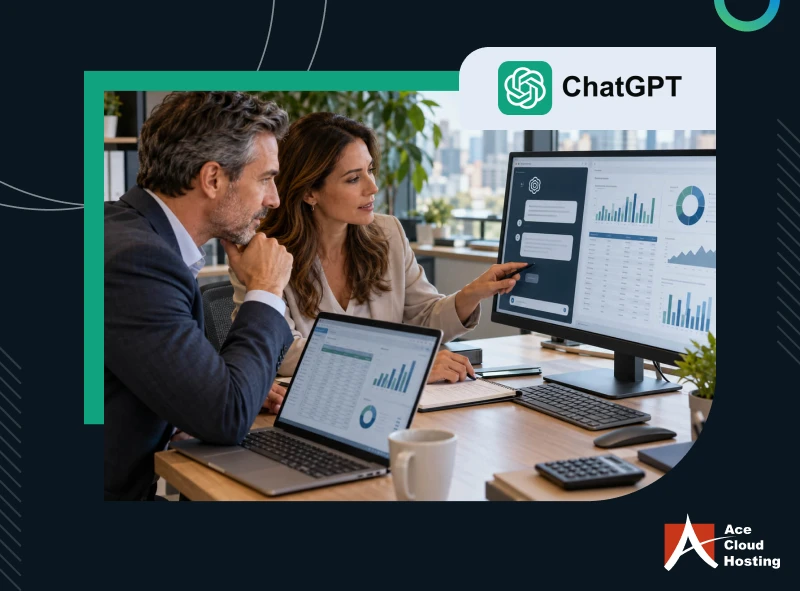
We upload that report to ChatGPT or perplexity or whichever one we are using, and we tell it to analyze the data for us, and it has found errors for us that we did not classify something in the right unit. So that is very important because in the memo, clients would write the unit name. When we bring in the data, we would write the right unit name, but sometimes tag it to the wrong unit as a class or a property.
So, it has pulled out so many instances. So, we go back two years at the end of the year, every quarter. As a matter of fact, we go back and pull up data for the last two years or 24 months, and we tell it to compare the vendor name by the item name or the products and services.
And it tells us the variations. Well, it was not right. This was added, and this was done. So it helps our team rather than visually look at each and every line item. It pulls up the data, and we love it. And you can do that. The same thing with the pivot, right? You can download it in Excel and pivot it.
But what happens is that with AI, you can upload it and let it do its magic. In that time, you can do something else. So, we are leveraging time as well.
Seth: Yeah. So, automation is definitely, you know, the automation factors. But there are other things. As you said, it can suffer from some hallucinations. Right. It’s true.
You know, we have a, if we want to know a little bit more from our audience where they’re at, with AI do have we do have a specifically designed poll question just for us for this. So, probably, if you would not mind, that’d be great to find out. So, very simply, are you currently using AI in your accounting processes in some way?
Yes. Very actively. Yeah. We’re testing out some tools right now. Seems to be where a lot of folks are at. But some of them are taking a deeper dive. Planning on exploring. Okay. That’s good. You’re kind of weighing things out, and, Nope. Not using any AI yet. You may be, and you might not even know it, but in terms of, you know, the tools that are out there.
Gita: Let’s look at the results. Oh, perfect.
Seth: See? Look at that. We have some folks who are very actively using it. And then, folks who are just kind of testing them out. That seems to be where a lot of folks are at. I, you know, I’ve found just in my own research, in talking to, you know, accountants, regularly, as I do, it’s, you know, the levels do vary, but they are diving in some way, shape or form.
And the folks who kind of dove in early are now really looking for some ROI. And somebody had a question about, you know, trusting AI tools with sensitive data. It’s much like accounting questions in general. It depends.
I wouldn’t be going and putting things in there that you might not want publicly shared. Like financial data, perhaps things that you know, but by and large, and some of the more advanced tools that I’m seeing too, particularly with agentic AI, they’re kind of in their own bubble.
It’s not going out into the world, necessarily, but, you know, definitely be, you know, definitely be, you know, very conscious of the things you’re asking it to do. That’s just, in my view.
Gita: Yeah, I’m using it 100%. You know, we are testing. We are always. But one thing that we were working on, two weeks ago, was bringing the actual data versus the budget, the budget versus forecasting. And that’s still work in progress for two of our clients who wanted that report. I’m like, let’s try AI and see where it can go rather than doing it manually.
Seth: So, but some folks are just seeing what you know, what, you know, ChatGPT.
Gita: You come up with accounting software that has its own built-in AI. Just for example, QuickBooks. You go to the bank conciliation. It’s right there.
Seth: Right there.
Gita: Yeah, it’s right there. Even with FreshBooks, if you go with them, you know, they have AI built-in in their bank reconciliation. There are Xero and Zoho. All the software is using it, but you need a human eye; it doesn’t matter how large the property portfolios are, how large the clients are, or how many units of properties the client is managing or holding. Acquiring or selling.
Because it all depends. If you start with a small client and nail down what you like and then apply it to your bigger clients, there is a plus to it. Now, how do we keep that in mind? It’s not only saying, okay, today I’m going to use ChatGPT, and it’s going to work for me, right?
No, every month or every 2 or 3 weeks, you have to go and look at what other AI is out there. That is going to help you, your team, and your clients. Right? It’s not only one thing. You have to keep up with the industry. Keep up with real estate accounting. You need to keep up with AI. You need to keep up with software. It’s not the only thing that helps.
Seth: So, where is it in your practice? I think some folks, yeah, the folks here are probably kind of wondering that as well. Like, all right, Gita, you know, you have a successful real estate practice. Where is it working for you?
Gita: We are, I would say 30% right now.
Seth: Oh, okay. What’s it helping you do?
Gita: It’s helping us classify transactions, finding out errors that we are making. That’s my biggest thing. I want to reduce the time for my team when they are doing manual work. That is my first goal.
Seth: Right.
Gita: So, we used AI for this team. They give us Google Sheets. So, we have like 10 or 20 Google Sheets, depending on the client.
And we take the Google Sheets; we put it in, we give them our information, and what we want the output to be. We tell it to compare the columns and everything and then give us an output. Right. So, then we can bring that, import it into QuickBooks. So that output we are trying to reduce manual data entry.
Seth: Yeah!
Gita: Even though they have multiple entities, they have multiple properties in that single one data file. So how can we optimize that? Right. So that’s where we are now; we talked about data exposure. And that is, if you do not give them your information, like your Social Security Number, your company name, and your address, you can avoid it.
Seth: Super sensitive stuff. Yeah.
Gita: Exactly. And that’s important, right? If you don’t give them that then, you know you want. You’re not exposing yourself as much. But remember, whatever you put in AI, whatever you put on Google, Facebook, LinkedIn. Somebody is out there collecting your data. So, use it wisely.
Seth: Which is true.
Gita: Put the right amount of data, only what you want to be exposed of, right?
Seth: Yeah. And our host here today, too, is very familiar with, you know, keeping data secure and safe.
Gita: Yep.
Seth: But, yeah, these, these use cases, Gita, whether it’s real estate accounting or, you know, any, any particular area of work that accountants are in, this is really what’s going to decide my role in accounting overall. How much it’s used, where it’s used, where it’s successful, where it still needs work, and it’s still very early days.
Gita: Yes, definitely.
Seth: You know, but you know, but more of these use cases, like you’re explaining, I think, are important. But sorry, anything to add, particularly on AI, know we have a couple of other things to get to today in our discussion.
Gita: No. If you have any questions from the attendees, that would definitely love to answer them. You know.
Seth: Yeah. Because okay. So yeah, we can talk about some other things to get you. Absolutely. So, the tech stack portion of our discussion is very, very important. As much as AI. Let’s discuss right here. This seems to be what works for you.
Gita: Right. So, I’m still a firm believer in QuickBooks Desktop. Don’t get me wrong, we still use QuickBooks Online because of our clients. Which is one of the best right now if you sit and compare Zoho, you know, the lower-end Zoho, Xero, FreshBooks, other ones. QuickBooks is still one of the best that I have found because of my real estate niche, right?
It gives me everything that I need in QuickBooks. I’ve tried many other software, but it’s not what I need from my client. So, I’ve stuck with QuickBooks right now. Even though we have clients who have individual LLCs and need a separate accounting file for each LLC, when it comes to multiple entities, you can go with the lower end because there’s only one property and there are only 1 or 2 bank accounts.
So, you know, it’s easy that way. Now, with QuickBooks Enterprise, I have my clients on Ace Cloud Hosting. That’s the only way we service them. There are a few others who have servers on there in their office, but we have been showing them how much it’s going to cost them in the coming years. Rent support and everything.
So, they’re looking into it. But, you know, along with QuickBooks, without the accounting software and without the workflow, onboarding, workflow processes, project management, we cannot accomplish anything we are going to talk about today, A to Z.
Because it starts from onboarding, it processes projects. We use ClickUp. I have used a couple; I’m not there to switch yet, but eventually, in a couple of years down the road, I will have to go to the next level and move upwards and let ClickUp go.
But the customer-facing whatever it is has to be very simple. And besides any software tech stack I use, the support has to be top-notch what if there is no support? If I cannot pick up the phone, or if I even send up an email? If I don’t get a response in a couple of hours, then it’s that I don’t like that software for some reason, you know.
Seth: Yeah. But most accounts, they just say they’ve got a problem, they need an answer.
Gita: Exactly. And for our clients, when we give them a task, a question is a task. You know, and we tell them you have to respond within 1 or 2 days. We don’t have a due date for you. You have to respond.
And that goes on because all these project management processes, the workflow we create, tend to help us design our accounting team for them. So for the expense and spend management, we use Ramp for reimbursements, and Expensify for employee reimbursements, which is really helpful. It integrates with QuickBooks and MakersHub is where you need the user roles for accounts payable.
It’s very detailed. I can create rules in there. It’s kind of AI in the back end, you know, all this because as you put rules, you’re creating your own AI. If you look at it right, you’re building that concept in your head, and you’re implementing it in the software. That is automation in the end. Anyway, that’s what AI does in a different way.
And the same thing goes with accounts receivable. So, if you have accounts payable, you have accounts receivable. And I love Bill and Pay. They have been there for the longest time for accounts receivable. They have a portal. BILL.com has accounts payable and accounts receivable, all built in one.
Anchor is perfect if you have an agreement to be signed; you can get that signed. And they accept payments as well as accounts receivable. So, you can create subscriptions on that.
But what we have found lately, I was once upon a time I was certified in Method CRM that integrates with QuickBooks desktop, and it has everything in it except for accounts payable that I don’t like, but they have out of the box. And then you have to customize everything.
So, we have done that with a couple of property management companies for their lease abstracts, escalations, and reconciliations. So, it has worked out really great. And of course, if we are using QuickBooks Enterprise, it’s going on Ace Cloud Hosting.
Seth: Right.
Gita: That’s what I’m going to like, I said, you know, for me, support is very important.
If I don’t get a response, I’m very agitated. You know, because we cannot go on to the next slide or the next task we have to accomplish for that client.
Property management software. Where do I start? Each industry, each segmentation of real estate, has its own tech stack. Okay. This is multifamilies – AppFolio, Buildium, and Yardi are a go right for long-term rentals, right?
For short-term rentals. It’s streamlined, right, for all different segmentations. Brokers have their own tech stack, and everybody you see in that segmentation has a different tech stack. So, these are the main ones for multifamily. And then it depends on the client’s budget. Also, you know if they are a large client, they don’t consider it as a budget. They consider how it can save time. How can we automate that is the key at the end of the day.
Seth: Right.
Gita: So, one client for vacation rentals, we have it took them six years to get it in them that they need to automate things. After six years, we started implementing SOS inventory. We went to Breezeway, we went to other software as well, and they downsized their employees by three people.
And that was good. 150 grand a year savings. You know, that was gross pay, right? Forget the benefits are going to add up. So, it’s going to be 200,000 eventually. Right. So that’s what we look at. You know, select the industry, know their back office, know what they need, and then pick the right tech stack that fits them and not what you want to offer them. And that’s the key, right?
Seth: So, you’d mentioned QuickBooks Enterprise, particularly as a pretty big one, for you, solving a lot of the challenges of modern real estate accounting. And somebody also has a question about, you know, the Intuit Enterprise Suite that is coming out. So, I don’t know if you could work that into this part of the discussion.
Gita: Definitely, definitely. So, we’re going to talk about Enterprise Suite, QuickBooks Online, and Enterprise desktop. It’s very similar. But there are still huge differences.
Seth: Right.
Gita: And now, in both versions, you can keep track of multiple entity levels. So, I mean, QuickBooks files, right? You can track your income and expenses. You can bring out your reports, and you can customize more.
When you go to the Enterprise level, you can customize your own reports right within the software. And that’s where you have an upper hand. Right. And as you go into the upper levels of versions, you have more tracking.
For example, one of the clients has class tracking, location tracking, and custom field tracking. Where we do department-wise, we give them a profit and loss statement and cash flow by department.
So not all clients will be the ideal one for the Enterprise level, for the IES or the Online version, or the QuickBooks Enterprise. But back again. Once we start working, get the back office ready, get their bookkeeping done, and become the controller, we need to go to the next level. How can we make them profitable?
And one of the other clients, once we started giving profitability by unit, they were managing a property management company, and they let go of 50 of their units because it was never going to be profitable.
Seth: Wow.
Gita: And that’s what we need because those 50 were going negative every time, every month on those 50 units. They were losing money, saying I said you’ve got to let that go. It doesn’t matter. The number of units you’re managing does not matter. Your bottom line matters.
Seth: Yeah.
Gita: And that performance visibility can only be done of what I discussed earlier on how to bring in the details. Now, QuickBooks Enterprise, remember when our clients are using our tech stack, other property management software, and then we are using QuickBooks. Right, now we call it corporate accounting, but you know what?
You have to learn to incorporate what they’re doing in the property management software and in your corporate accounting to get your profitability. If you can’t, then that’s a missing link that we all can support our clients to grow. Now, if you want to use QuickBooks Enterprise alone for accounting, can you do it? Yes, you can do it.
How can we do it? Because, you know, you may come and say, well, QuickBooks is charging us $10 per transaction for receiving payment, or you’re going to come up with many other excuses, right? I’m going to call it an excuse.
But at the end of the day, spending that $10 for one tenant for saving money is peanuts compared to what you’re automating and how you’re showing them the profitability by unit, right? That’s just part of the business. And when do we show that value to a client? We can’t show them the value. When you’re doing bookkeeping only.
Seth: Right.
Gita: Because you don’t have those kinds of conversations. So you have to make sure that you build your services accordingly, not the bill. Build from bookkeeping to the next level up slowly. But does it have to be overnight? But you can do it. You know,
Seth: So you’re using QuickBooks Enterprise cloud-hosted environment. And, we do have our final poll question around that, which we’d like to launch and, hopefully, get to at least a couple of your questions. They’ve been really great, and we can maybe share them with Gita afterward as well. Maybe she could contact you all, but I want to get to our final poll question on, you know, kind of being in the hosting environment.
So, if we could launch that. How are you all currently accessing your accounting systems? So, is it only from the office computer? Hopefully not, remote, into the office computer? In a cloud and hosted setup, so you can kind of access anywhere, mixed methods or. Gosh, I’m just not sure.
Seth: Hopefully not. Hopefully, you have a pretty good sense of how you’re accessing your accounting system. So, if you all can just take a couple of moments to answer the choice that applies to you, I think we can probably get through a couple of questions for the top of the hour here.
Gita: It’s a transition. It’s a transition when you get to the cloud.
Seth: Oh, no doubt. Well, here we are. You know, we got most of the folks here who are kind of only doing it from their office computer. Okay. I mean, you know, that’s definitely a choice. And, you know, one that I know that, you know, folks like Ace Cloud Hosting would probably want to have a conversation with you on the fact that maybe you don’t have to.
Some of the folks here are remoting into an office computer, or they’re in a mix of a cloud and hosted environment. Gita yourself, you’re in the hosted environment.
Gita: I’m mixed. I’m mixed.
Seth: You’re mixed. You’re mixed.
Gita: I am mixed. But just a tip. If you are working from your computer, make sure you have a backup service. I use Carbonite every minute, or you can set up your settings. I changed its preferences when you want the computer to be backed up. And it saved my life years and years ago. I’ve lost all my clients’ data if I were not backing it up.
Seth: So, Gita, a question came in that hopefully you can answer. You see more real estate firms moving towards like, hosted environments instead of local servers?
Gita: Yes.
Seth: If so, why? Or anything behind that?
Gita: It depends on the size of the firm. Right. So, we have a couple of local clients, property management companies, and investors as well. Investors turned a property management company. They have a server in-house, and they hired an IT person who multitasks, doing other things also. So, for them, that is beneficial.
Right. They want that secured. And it’s me also not educating them too much because once they said no, we there’s no way we’re going to do this in our lifetime. Right? So, you just back off and worry about what’s important to them, but eventually I think it’s going to go away because, you know, the cost of the computer hardware is upgrading.
And the thing of it is, the technology is changing every single day. If it’s not for one app, it’s for another software, it’s not for the software, it’s for your computers. And where are you going to gain the bandwidth on your computer?
Seth: Yeah.
Gita: So, I’m on my last laptop, and once that’s done, I’m 100% in the cloud.
Seth: Wonderful. Hey, do you know of any particular, you know, back to the AI issue? You know, are you, you know, getting kind of well-versed in, you know, an AI-powered platform specifically for property-level accounting or financial automation.
Gita: You know,
Seth: Dabbling in any of that yet?
Gita: Little bit here and there. Nothing to write home about yet.
Seth: Nothing happened. Early days.
Gita: Yeah, early days. Yeah. I mean, the purpose is to get that manual work reduced for checking their reports every month. And at the end of the year, that takes a lot of time.
Seth: And finally, you, too, well, we might be able to get 1 or 2 more questions. And thank you all for being so patient. Multi-entity consolidation, really paying for any recommendations for that.
Gita: The Enterprise Desktop version and Online version have that. If you don’t use it, there’s an app for Phantom that does it. And a couple of other reporting apps also help you develop that multi-unit reporting.
Seth: Yeah. I’ve also heard of SoftLedger, which does that as well.
Gita: Yeah. There are multiple out there.
Seth: Multi-entity. Yeah. And you know, you know, if you convert a QBO file to Enterprise. Is that possible?
Gita: Oh, yes. Definitely.
Seth: Yeah.
Gita: Let me know. Let’s get in touch. Yeah. Yeah, definitely.
Seth: Okay. Jason, you heard or definitely get in touch with Gita. Finally, it is offer time, people want to get to, you know, you’ve stuck around with us. Thank you so much. I’m sorry if we didn’t get to every single question. Hopefully, we hit most of them. But, you know, you could probably reach out to Gita directly if that’s something that people can do for you.
But we have a special offer for you from our hosts. Ace Cloud Hosting. Move forward, take the next steps.
- $19.50 per user per month for three months for hosting QuickBooks Enterprise.
- 20% Off on Managed Security. Secure your firm’s entire attack surface with an AI-powered managed security service.
- 10% Off on Real Estate Books. Exclusive savings on QuickBooks Online courses and upgrade your skills with ease.
I know Ace Cloud Hosting is our host here, but just in general, you know, we’re in the second quarter of the 21st century. Security, we understand, is an extreme priority. You want to know that you’re in the most secure environment possible? So, you know, definitely in the chat here, we have, for attendees, just to kind of scan the links or click on the links, you will definitely get those offers.
Finally, Gita, final question for you. A lot of books on Amazon, from you, do you have a favorite or a recommendation for other accountants?
Gita: So. Oh, my favorites, I wrote them. Come on, guys.
Seth: You know your babies. I know you got to choose.
Gita: Yes. So, what I would start with is which type of client segmentation of the real estate industry you’re delving into. Right? If you’re saying you’re going for brokers, then get the broker right.
If you’re going for multifamily and you’re saying, okay, I don’t know where I’m going right now, right? I may go into a commercial. I may go into multifamily. So, at that point, I would say go with the commercial because you can take that guide and you can dumb it down and not use some of the features that I have shared with you guys. You don’t have to. And then you can convert that into a multifamily.
Seth: Wonderful. So, Gita, can our attendees reach out to you at all? And if so, what’s the best way?
Gita: Sure. Any time, you can find me everywhere. Gita Faust. Just Google it. There’s only one in the world so far that I know. We know that, though. Yes.
Seth: That’s great. Yeah.
Gita: Number is 215- 579-1465.
Seth: Oh, wow.
Gita: And I think somebody will have to type in my email address for them. It’s [email protected]. You can shoot me an email or visit my website. Oh, better yet, scan the QR code. It’ll take you right to my website.
Seth: There we go.
Gita: I think about it.
Seth: Well, Gita, it has been a true pleasure. I love your story. I love your journey. I love what you’re doing in accounting. These days. Thank you to Ace Cloud Hosting today. Hopefully, and you know, there is going to be a recording of this as well, but hopefully you all got something, a little something out of today. Thank you for taking the time out of your day to be with us.
Gita: Thank you.
Seth: Thank you for the rest of your day. Be healthy and productive. And, yeah, thanks so much. Take care, everyone.
Gita: Bye-bye.
Subscribe to Ace Cloud Hosting today to receive expert content, practical advice, and thought-leadership insights that help businesses stay competitive, secure, and future-ready.