Table of contents Toc Icon
Table of contents Toc Icon
Accounting is built on numbers, but lasting client relationships are built on trust. Today, business owners expect more from their accountants than accurate books and timely tax filings. They want clear communication, proactive guidance, and someone who understands the challenges behind the numbers.
As client expectations continue to evolve, many CPA firms are asking an important question: What does it really mean to deliver a client-centric experience? How can firms build stronger relationships that go beyond compliance and create long-term value?

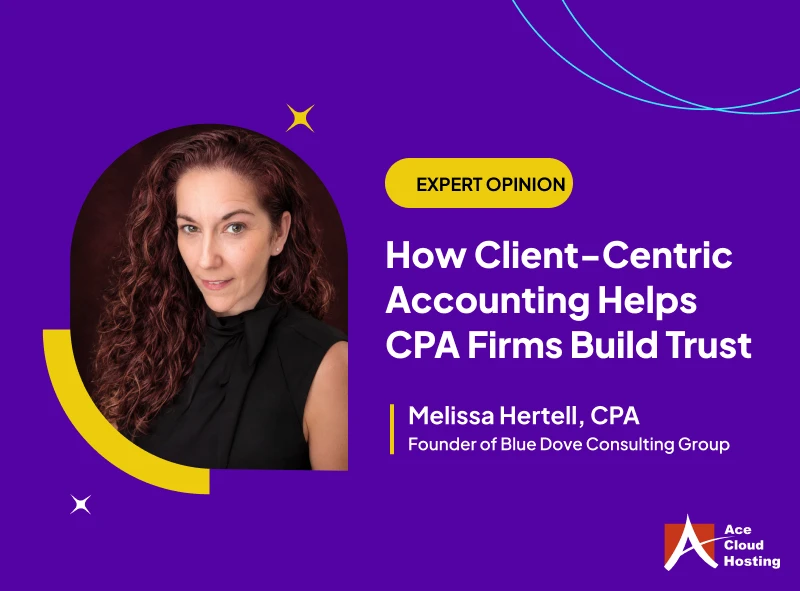
Ace Cloud Hosting spoke with Melissa Hertell, CPA, founder of Blue Dove Consulting Group. With over 15 years of experience in bookkeeping, outsourced Controller and CFO services, tax strategy, and advisory, Melissa helps home improvement companies improve profitability, gain financial clarity, and make better financial decisions.
Her approach combines technical expertise with empathy, making accounting more approachable and valuable for clients.
In this expert Q&A, Melissa explains what it really means to be client-centric, why clear communication policies matter, what red flags business owners should watch for, and how firms can turn routine bookkeeping into a more valuable advisory relationship.
What does being a truly client-centric CPA firm look like beyond simply responding quickly to emails?
Being client-centric has very little to do with answering emails in five minutes. It’s about creating an environment where clients feel safe enough to tell you the truth.
As accountants, we’re one of the most intimate professional relationships someone has, second only to their doctor seeing them naked. We know what they make, what they spend, where they’re struggling, the mistakes they’ve made, and sometimes the things they’re too embarrassed to tell anyone else.
If they don’t feel safe, they’ll leave out details they think are insignificant, or worse, the ones they’re ashamed of. Those are often the details that matter most.
One client recently told me, “I appreciate you for making me feel safe with you during this process.” That meant more to me than any review because trust is the foundation of good advice.
Sometimes clients come to me spiraling because they’re behind on bookkeeping, owe taxes, or feel like they’ve failed. My first job isn’t to lecture them. It’s to sit with them in it, let them know they’re not alone, separate the facts from the fear, and bring them back to center with small, manageable action steps. We can’t make good financial decisions from a place of panic.
Once clients feel seen instead of judged, the conversation changes. They’re honest. They ask better questions. They become proactive instead of reactive. That’s when we stop being “the accountant” and become a trusted advisor.
Why do communication policies and clear expectations matter so much for stronger client relationships?
Most client frustration doesn’t come from mistakes. It comes from uncertainty. If someone sends an email and has no idea whether they’ll hear back in two hours or two weeks, they’ll naturally start creating stories in their head. Clear communication policies eliminate that uncertainty before it becomes frustration.
I believe in setting expectations from day one. Clients should know how we communicate, when they can expect a response, what qualifies as urgent, and what I need from them for us to be successful together.
Clear expectations also create healthy boundaries. I care deeply about my clients, but I also know I do my best work when I’m not constantly operating in emergency mode. When everyone understands the process, clients receive a better experience, and our team can focus on delivering thoughtful advice instead of putting out unnecessary fires. Communication isn’t just about responding. It’s about building trust through consistency.
What are the biggest red flags business owners should watch for when working with an accountant or bookkeeping provider?
There are a few red flags that immediately concern me. The first is a provider who simply delivers numbers without explaining what they mean. Most business owners didn’t start a business because they wanted to analyze a Profit & Loss statement. They want someone who can explain what changed, why it changed, and what decisions they should consider because of it. Information without context isn’t very valuable.
Another red flag is an advisor who gives recommendations without explaining the responsibilities that come with them, whether it’s implementing a new accounting system, changing entity structure like becoming an S Corporation, or making another strategic recommendation; clients deserve to understand both the benefits and the ongoing responsibilities, not just the upside.
I’d also question an accountant or bookkeeper who never asks about your business. Good advisors are naturally curious. We should want to understand your goals, your industry, your challenges, and where you’re trying to go, not just categorize transactions. The better we understand the business, the better guidance we can provide.
Communication is another big one. I don’t expect daily updates, and not every client needs ongoing meetings. But during an active engagement, clients shouldn’t be left wondering where things stand or whether anyone is working on their project. Even a simple update goes a long way toward building trust.
Finally, if you feel like you have to hide something from your accountant because you’re afraid of being judged, that’s a problem. Business is messy. Every entrepreneur has made mistakes, fallen behind, or had moments where they weren’t sure what to do next. Your accountant or bookkeeper should be someone you can tell the whole story to. We can’t give the best advice if we’re only getting half the picture.
The strongest client relationships are built on education, communication, curiosity, and trust, not just clean financial statements.
How can firms give clients more visibility into their financial data without overwhelming them with reports and details?
More reports don’t create more clarity. Most business owners don’t want a 40-page financial packet every month. They want to know whether they’re making money, where cash is going, what’s improving, what needs attention, and what they should do next.
Technology has made real-time financial information more accessible than ever, but software doesn’t replace conversations. A dashboard only becomes valuable when someone helps clients understand what they’re looking at.
I prefer focusing on the handful of metrics that actually matter for that particular business, whether that’s cash flow, gross profit, labor costs, accounts receivable, or something industry-specific. Then we talk about what changed, why it matters, and whether action is needed. The goal isn’t to impress clients with data. It’s to give them clarity and confidence.
What systems or habits help accounting firms turn routine bookkeeping and reporting into a more valuable advisory relationship?
Bookkeeping is the foundation. Advisory is what you build on top of it. When the books are accurate and up to date, we stop spending meetings explaining the past and start planning the future. For me, advisory isn’t about having all the answers. It’s about helping clients think clearly enough to make better decisions.
Sometimes that’s discussing pricing, profitability, cash flow, hiring, or tax strategy. Other times it’s helping someone who’s overwhelmed break a complicated situation into manageable next steps. Shockingly, accounting is actually about more than numbers!
One of my favorite sayings is that we can’t make good decisions from a place of panic. My job isn’t just to reconcile accounts or prepare tax returns. It’s to provide enough clarity, perspective, and encouragement that my clients can confidently take the next step.
At the end of the day, clients don’t hire us because they love accounting. They hire us because they want peace of mind. If we can combine technical expertise with trust, communication, and genuine partnership, we’ve created something far more valuable than compliance; we’ve created confidence.
Secure cloud solutions that help your firm collaborate seamlessly, work from anywhere, and focus on trusted client advisory.
What Does It Take to Build Stronger Client Relationships in Accounting?
Building a client-centric accounting firm is about more than accurate financial reports or fast email responses. Melissa Hertel believes trust, clear communication, empathy, and proactive guidance help accountants move beyond compliance to become trusted advisors who build stronger, long-term client relationships.
At Ace Cloud Hosting, we help accounting firms deliver that level of service with secure, scalable cloud solutions. From hosting accounting applications such as QuickBooks, as well as providing fully managed virtual desktops, managed IT services, and AI-powered cybersecurity services, our solutions give firms the flexibility and reliability they need to collaborate efficiently and focus on serving their clients.
How is your firm building stronger client relationships beyond the numbers? Share your thoughts in the comments.