Table of contents Toc Icon
Table of contents Toc Icon
Modern architecture has evolved immensely with the introduction of advanced BIM and CAD tools. Architects can now create complex designs and visualize them to see their feasibility with real-world scenarios. It is now possible to deliver projects faster than ever because of AI-powered features for review and workflow automation.
However, these tools are graphics-intensive and require parallel processing capabilities to function optimally. Moreover, architecture firms must manage hybrid teams, tight project deadlines, client expectations, and rising cybersecurity concerns. These modern-day needs are slowly causing businesses to outgrow traditional office desktops due to their inflexibility, cost, and security concerns.
Architects today are turning to hosted virtual desktops to meet the IT requirements of advanced design solutions, minimize IT overhead, and ensure flexibility in work.
Here are the reasons hosted virtual desktops are a preferred choice for architects.
1. Facilitates Flexible Operations
Modern AEC projects require architects to be mobile rather than operating from the office. Moreover, since the pandemic, architects have preferred to work in a hybrid mode to maintain work-life balance.
AIA’s 2024 Firm Survey Report includes data from 1,200+ architecture firms, while AIA’s return-to-office coverage highlights how firms are now operating across multiple studios, virtual studios, and hybrid setups. This makes secure remote access to design tools and project files a practical IT requirement, not just an employee convenience.
However, with physical desktops, architects are forced to complete their work in the office, leading to additional stress and reduced productivity.
Hosted virtual desktops offer architects a flexible IT solution for remote work. They can access design tools and data from any location on their personal devices. All they need to do is log in to the virtual desktops from their browser or remote app.
It gives architects real-time visibility into their projects while they are visiting construction sites or attending client meetings. For the firms, hosted virtual desktops enable them to easily implement remote work policies.
2. Makes Client & Team Collaboration Easy
Sharing designs for client approval is a critical process in an AEC project that affects deadlines. Moreover, architects need to update clients on every design change, which occurs primarily via email.
It leads to long email threads and multiple versions of files. Furthermore, architects must collaborate with engineers, contractors, and leads spread across different locations to facilitate project delivery.
Hosted virtual desktops provide all team members with an online platform to share files and work on the design applications. The design updated by architects in the CAD tool can be viewed, reviewed, or edited by other users, streamlining the BIM workflows. Moreover, you can share designs with clients on the online portal, ensuring faster approvals.
3. Supports Graphic-Intensive Workloads
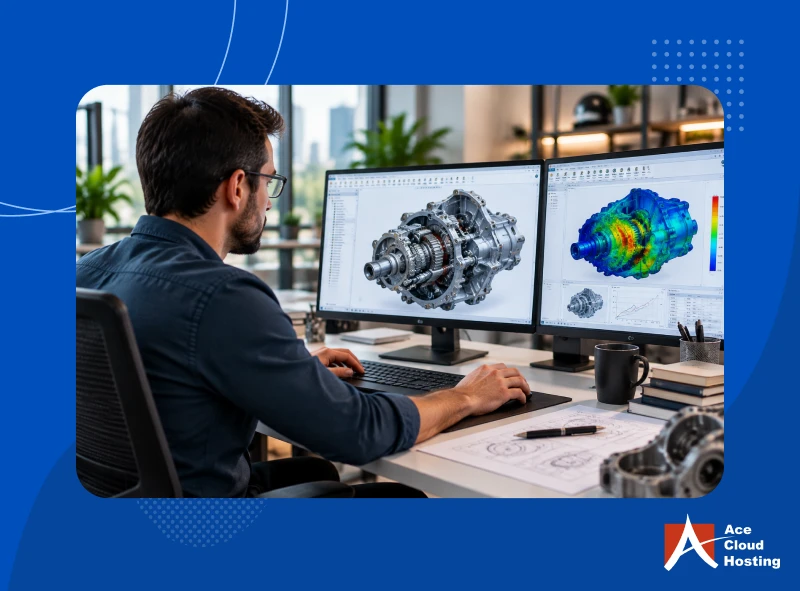
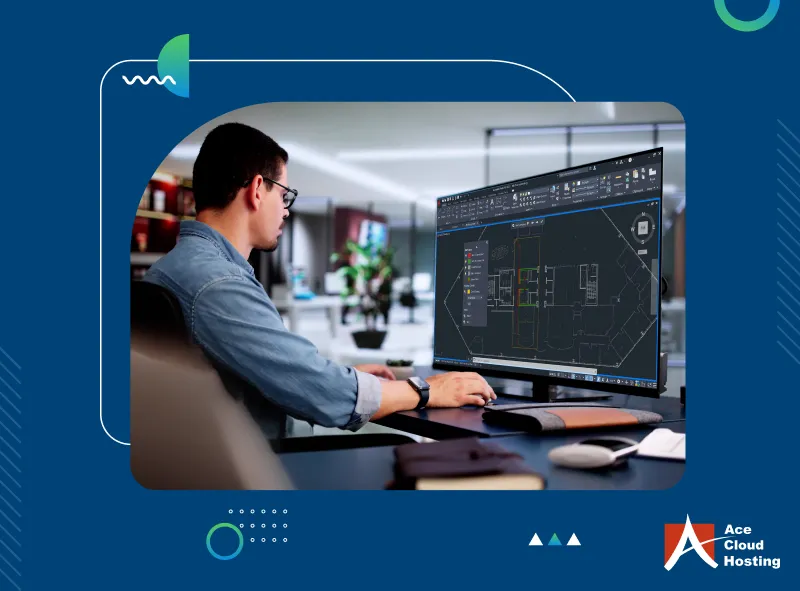
Modern CAD and BIM applications such as Autodesk Revit, AutoCAD, and SOLIDWORKS empower architects and engineers to create high-resolution designs and intricate 3D models with real-time visualization. But that power comes at a cost: these applications are highly resource-intensive, requiring GPU-powered desktops to handle heavy workloads such as 3D rendering, simulation, and large-model processing, which is exactly why teams turn to Revit hosting, AutoCAD hosting, and SOLIDWORKS hosting on GPU-powered virtual desktops.
Hosting providers offer you virtual GPU desktops built on a high-performance computing (HPC) environment. These desktops can be configured to support demanding CAD and BIM workloads, depending on the application, model size, and user requirements. Moreover, you can access your applications and heavy project files remotely on any thin client.
GPU-powered virtual desktops give your architects the rendering muscle they need, accessible from any device, scalable on demand, with zero hardware refresh cycles.
4. Secures Data and Apps From Advanced Threats
Architects work on critical project data, including CAD designs, plans, schematics, and client information. If project details are compromised, it can not only shut down the project but also cause serious damage to the reputation. However, as the cyber threat landscape evolves, it is increasingly challenging to ensure data security in an on-premises desktop setup.
Hosted virtual desktop providers deploy a multi-level security infrastructure to ensure comprehensive data protection. They deploy safety features at the physical, network, and endpoint levels, such as 256-bit AES data encryption, multi-factor authentication, distributed firewalls, DDoS protection, antivirus, antimalware, and more. In addition, you can define roles and set permissions for each user in the AEC team to prevent unauthorized access, insider threats, and accidental deletions.
5. Offers Reliable Support
Technical issues can hamper the architecture team’s productivity and affect deadlines. Without a responsive in-house team, even minute issues, such as hard drive replacement, can cause frequent downtime. However, deploying an in-house IT team to ensure minimal disruptions is both financially and operationally challenging.
Hosted virtual desktop providers offer 24/7/365 customer support to all customers. Anytime an issue occurs, whether minor or major, you can contact them via phone, email, or chat. The best providers also provide each customer with a dedicated account manager to personally handle their issues.
6. Offers Diverse Desktop Options
An architecture team’s IT requirements keep changing according to the project they are working on. Moreover, with several GPU options available, there is a tendency to keep upgrading to a more advanced one. For local desktops, this means replacing them at regular intervals, which is not financially feasible for any firm.
Virtual desktop hosting services offer numerous options. For instance, you can choose any GPU (let’s say NVIDIA A4) you want with the required memory, processing, and storage. As the desktops are virtual, you can switch to another GPU (let’s say NVIDIA A100) easily without the need to refresh the in-house desktops. Competent hosting providers also allow you to customize virtual desktops according to your specific business requirements.
7. Minimizes IT Expenditure
For an architecture firm, IT expenditure can consume a substantial portion of its budget, which it could otherwise allocate to other core projects. For starters, they need to purchase high-end desktops that can facilitate the resource requirements of graphics-intensive CAD applications.
However, as these applications upgrade, you have to perform a hardware refresh. These capital expenses lead to recurring operational expenses, including hardware deployment, management, maintenance, power bills, and repairs.
Virtual desktop hosting minimizes both capital and operational expenses. Firstly, you can access hosted virtual desktops from any thin client or personal device. Therefore, firms can implement a BYOD policy or use basic devices on-premise, reducing capital expenses significantly. Secondly, as the on-premises IT setup is minimized, operational expenses are also reduced.
8. Guarantees Availability
Your on-premises IT infrastructure is vulnerable to multiple threats that can cause major operational downtime. For instance, a fire or a natural disaster can disrupt your IT setup. Or, you could be the target of a DDoS attack. In such cases, there is not much you can do to ensure the continuity of operations.
Hosted virtual desktop providers, on the other hand, guarantee a minimum uptime of 99.99% in their SLA. They deploy a robust Business Continuity and Disaster Recovery (BCDR) plan to ensure the availability of your applications and data. Firstly, their virtual desktop infrastructure is hosted in multiple data centers with fault-tolerant systems, ensuring no hardware or equipment failure leads to downtime.
Secondly, they replicate your applications and project data in multiple data centers ( geographically distant from each other) to ensure failover in case a major natural disaster affects a data center location.
9. Provides a Scalable IT Solution
The IT resource needs of an architecture business are predominantly project-dependent. It means that if there is a sudden influx of projects, you require more resources than normal. Moreover, as your business grows, you must also scale the IT setup to meet requirements. Physical office desktops do not offer this flexibility. In both scenarios discussed above, you need to modify upgrades to high-end desktops.
Hosted desktops, on the other hand, can be scaled instantly according to the business requirements. As these desktops are virtual, there is no need to invest in on-premises desktops. You can ask the provider to upgrade the configuration, and they charge you based on resource usage.
10. Optimizes IT Management
In an office desktop setup, you need to deploy an extensive IT team to manage tasks such as hardware procurement, deployment, and replacement. They need to monitor the IT system 24/7 to identify and mitigate issues.
With virtual desktop hosting, you outsource the entire IT management to the provider. They take care of every IT issue at the backend, without you even realizing it. It relieves you from the hassles and expenses of in-house IT management and allows you to focus on other core functions.
Choose Hosted Virtual Desktops To Make Your AEC Firm Future Ready
As design tools evolve, hosting providers ensure that virtual desktops can meet resource requirements. They provide architects with a flexible, secure, and high-performance solution that supports modern architectural operations. However, to reap the full benefits of hosted virtual desktops, choosing the right hosted desktop provider makes all the difference. Hence, you must try out each provider’s services and features before shortlisting them.
Ace Cloud Hosting offers GPU-powered virtual desktops built for the AEC industry, helping architects run CAD and BIM applications and access project data on high-performance cloud desktops. With reliable performance, 24/7/365 support, and enterprise-grade security, your team can work on demanding design workloads without depending on local workstations.
Run CAD and BIM apps on secure, GPU-powered cloud desktops, anywhere, without on-premises limits.