Table of contents Toc Icon
Table of contents Toc Icon
Accounting firms are entering a defining era, one shaped as much by people as by technology. As AI, hybrid work, and rising client expectations change how firms operate; one question stands out: what kind of culture will attract, grow, and keep great talent?

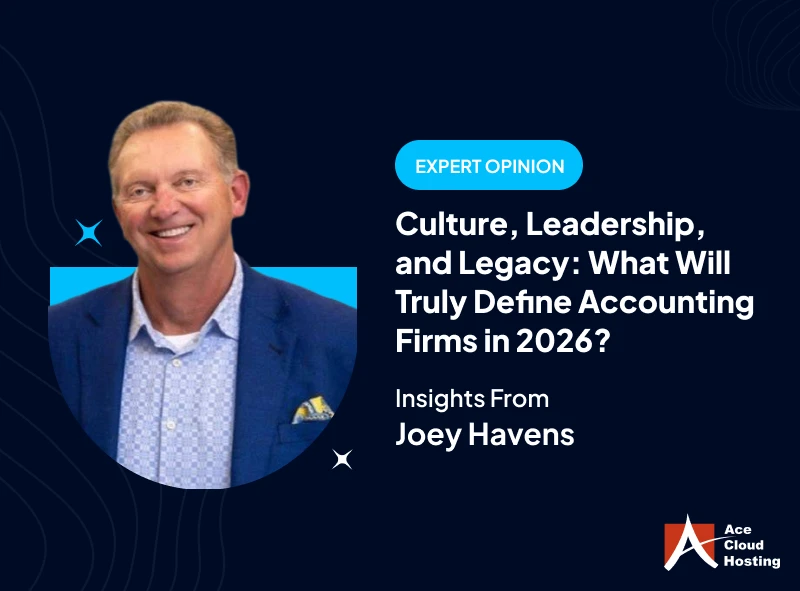
To explore this, Ace Cloud Hosting spoke with Joey Havens, CPA, a nationally recognized thought leader in workplace transformation and the author of Leading with Significance: How to Create a Magnetic, People First Culture.
After a 30-year career at HORNE LLP, where he helped build the firm’s Wise Firm culture, Joey continues to inspire leaders to create workplaces where belonging, trust, and purpose guide performance. In this conversation, he shares what will truly define accounting firms in 2026, magnetic cultures, intentional leadership, and legacies built on people rather than metrics.
How do you define a “magnetic” firm culture, and why will it be a defining factor for accounting firms heading into 2026?
A magnetic culture is one where people feel valued, connected, and inspired to do their best work—because they want to, not because they have to. It’s a culture built on belonging, trust, flexibility, and purpose. In Leading with Significance, I describe it as an environment where people choose to stay, choose to grow, and choose to contribute at a higher level. Team members believe they can achieve their dreams and reach their full potential.
The defining moment occurs when leaders believe in people’s inherent goodness and trust first. Leaders are vulnerable, transparent, and connected through caring. A magnetic, strong culture builds a community—a tribe—where everyone feels the energy of creating something bigger than themselves. There’s a real infinite purpose (compelling vision) beyond just being the biggest or best.
Heading into 2026, magnetic cultures will be a competitive differentiator, as the profession faces a convergence of pressures: a talent shortage, accelerated AI adoption, rising client expectations, and a workforce that prioritizes meaning and flexibility. Firms that cling to outdated models will struggle to attract and retain top talent. Firms that create magnetic environments will draw in high performers the way a strong brand attracts customers.
The market no longer selects firms simply based on technical skills—there are many qualified accountants. Instead, they choose firms based on the experience provided to both clients and team members.
What role does leadership play in creating environments where teams feel empowered to grow, innovate, and serve with purpose?
Leadership is the central force. Magnetic cultures don’t happen by accident—they’re shaped daily by the decisions and behaviors leaders model and the priorities they reinforce. Every book I have signed includes the personal message: Be Intentional!
Culture never rises to a leader’s aspirations; it rises to the level of the values and behaviors we are intentional about and falls to the level of the behaviors we allow or tolerate. Consistency and transparency are hallmarks of magnetic leadership.
Key roles for leaders include:
- Believe: Believe in the inherent good in people and magnetic energy. Beliefs affect our words, decisions, and actions. Share a compelling vision of purpose.
- Build Trust: Leaders must be vulnerable and trust first. Focus less on control and more on empowering people to see and reach their full potential. Provide the benefit of good intentions so team members can learn quickly.
- Connect: Connect with team members and demonstrate caring. Demonstrate vulnerability by letting people know who they are as a person. When team members know leaders care, they will care.
- Shift from control to clarity: Leaders who articulate purpose, expectations, and guardrails—and then let their teams run—unlock innovation. Align team member personal goals with company goals.
- Listen deeply and respond with intention: When people feel heard, they feel valued. When they feel valued, they contribute at a higher level. Establish confidential feedback loops to provide ongoing opportunities to be intentional and generate more consistent experiences.
- Lead with significance, not ego: The most influential leaders aren’t focused on their own success—they’re focused on elevating others. Leaders inspire others to see and realize their full potential by showing appreciation, offering recognition, and demonstrating respect.
In my experience, leadership’s most significant responsibility is to create a culture where people feel they belong and where they can pursue their full potential as they contribute to something bigger than themselves.
From your experience at HORNE LLP, what lessons can firm leaders learn about building a lasting legacy that goes beyond revenue and rankings?
When I look back on my time as CEO at HORNE, the growth and the overall numbers were incredible, but they were simply a result of a magnetic people-first culture. Our commitment to building our Wise Firm culture, where people can thrive, is our most important achievement. We grew fivefold and became more profitable, but what I’m most proud of is how we created a workplace where people became better leaders, better teammates, and often better versions of themselves. Our compelling vision of building the Wise Firm culture together generated a magnetic energy that brought incredible talent and opportunities to our firm.
The biggest lessons?
- People-first is not a slogan—it’s a strategy: When you invest in people consistently, performance follows. A magnetic culture produces both: a thriving team and outstanding results.
- Belonging fuels excellence: When people feel seen and valued, their discretionary effort goes through the roof. We saw it year after year.
- Transparency builds trust: We openly shared turnover, engagement scores, and culture metrics. Transparency creates accountability and accelerates improvement.
- Legacy is built through significance, not success: Revenue, rankings, and accolades fade. The lives you impact never do. My greatest treasures are the notes, letters, emails, texts, and conversations with team members who shared how much of a positive impact we had on their lives.
A firm’s true legacy is not what it achieves—it’s what it enables in its people.
How can accounting leaders balance the pursuit of growth with developing people-first cultures that truly retain top talent?
This is not a balancing act, one that assumes we control people and their full potential. For any firm seeking exponential, organic, and sustainable growth, it’s a virtuous cycle.
A people-first culture accelerates growth, and sustained growth requires a people-first culture. Growth will result from prioritizing a magnetic, people-first culture.
Leaders can:
- Align growth strategy with culture strategy: Every major strategic decision—new services, expansion, AI adoption—should be filtered through a people-first filter: How will this strengthen or weaken our culture? What do we need to be intentional about to know our culture can support this initiative? What feedback do we need to understand the impact on our team members? Have we communicated the WHY behind this strategy? What are the benefits to our team members? What role do our team members play in this strategy?
- Measure what matters: Track belonging, trust, flexibility, turnover, and team member experience as the top priorities. Report on these transparently. Connect the dots to show how the firm is making progress toward its mission or guiding purpose.
- Create career paths that inspire: Today’s top talent wants growth, variety, and purpose—not just a “time in seat” promotion model. Regularly communicate the meaning and impact of a team member’s role.
- Remove friction that burns people out: AI and process modernization should free people to do work that energizes them, not exhausts them. Accelerate the learning process by advocating and sponsoring team members with new growth experiences that are faster than traditional career tracks.
When firms elevate people first, they attract talent that grows the firm faster than any marketing strategy ever will.
As technology, client expectations, and work models evolve, what should firm leaders focus on to keep their culture and purpose strong?
Firms entering 2026 need to prioritize five things:
- Belonging and Trust as Performance Drivers: Teams with strong belonging and high trust outperform on collaboration, innovation, and client experience. Leaders must be intentional in expressing belief, trust first, and connect by demonstrating they care.
- Flexibility effectiveness—not just hybrid policies: Flexibility must empower people to do their best work while meeting client needs. The firms that support flexibility tailored to the individual, their role, and their team will win the long race.
- AI as an accelerator of talent—an enabler- not a replacement: Use technology to eliminate low-value tasks, reduce burnout, and give people space to develop higher-value skills. Celebrate early adopters and share success stories. Collaborate to use AI to enhance critical thinking skills while growing communications skills for guiding clients. Empower team members to facilitate changing their role with AI capabilities and use the free time to learn even more.
- Purpose as a daily leadership practice: People don’t want a job—they want to be part of something meaningful. Leaders must continually connect work to mission. Prioritize learning over utilization to accelerate talent growth and successful business model transformation.
- Courageous conversations: As the pace of change accelerates, leaders must talk openly about what’s working, what’s not, and what must evolve. Exercise transparency and the WHY at every opportunity.
Firms that combine purpose, people-first leadership, and clarity of vision will build resilient cultures that endure—regardless of how the profession evolves. In times of uncertainty and rapid change, resiliency is essential, and it comes from a magnetic, people-first culture that fosters a strong sense of belonging and high levels of trust. Remember, the numbers will follow naturally and have always been impacted by team members’ engagement.
Empower your team with flexible, secure cloud solutions that enhance collaboration and support growth.
Final Thoughts
As firms look ahead to 2026 and beyond, the message is clear. Culture is not a side project; it is the foundation of sustainable growth. Joey’s perspective reminds us that belonging and trust are not abstract ideas; they are practical drivers of engagement and performance. When leaders believe first, trust first, and care first, innovation and stronger results follow naturally.
At Ace Cloud Hosting, we see this shift every day. Technology supports productivity, but it is a culture that keeps teams motivated and resilient. Our goal is to help firms’ pair secure cloud solutions with leadership practices that strengthen purpose and connection. The future belongs to firms that lead with significance, and to workplaces where people can grow and thrive.
You’ll also like: