Table of contents Toc Icon
Table of contents Toc Icon
The accounting profession is facing a growing talent crisis. The American Institute of CPAs (AICPA) has estimated that 75% of today’s CPAs will retire within the next 15 years, far exceeding the number of accounting professionals entering the workforce.
At the same time, firms are dealing with declining accounting enrollments, burnout concerns, evolving workplace expectations, and increasing pressure to make accounting careers more attractive to younger professionals.

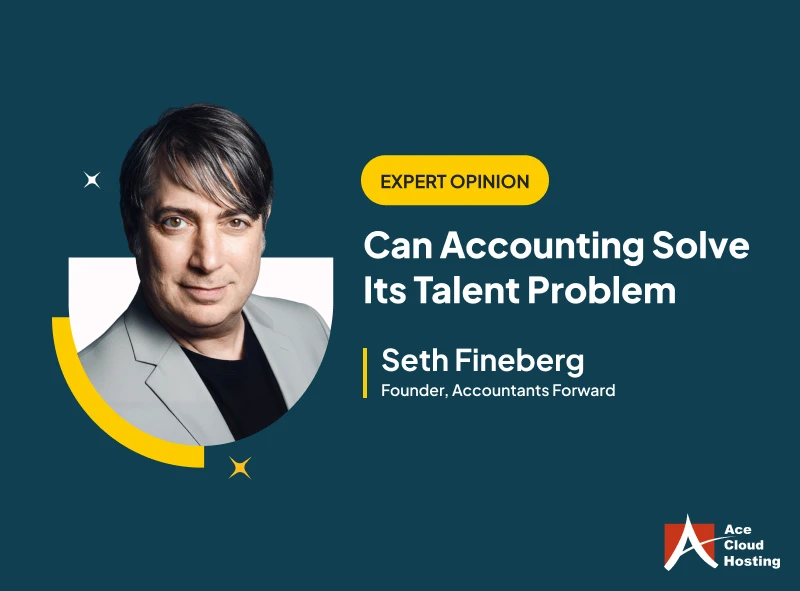
Ace Cloud Hosting spoke with Seth Fineberg, founder of Accountants Forward and an accounting industry consultant, content strategist, and speaker.
With more than 30 years of experience covering the accounting profession, Seth has closely observed how firms are adapting to changing workforce expectations, emerging technologies, and new client demands.
In this expert Q&A, Seth shares what is really driving the accounting talent shortage, why culture and clarity matter as much as compensation, how AI is reshaping career opportunities, and what firms must do now to attract, develop, and retain the next generation of accounting professionals.
What is driving the shortage most: retirements, declining enrollments, the 150-hour rule, low starting pay, or burnout?
This was addressed at the latest AICPA ENGAGE conference earlier this summer. First and foremost, the 150-hour rule is right out. Certainly, some saw it as a deterrent, but not enough to be a main driver of the shortage. In fact, there are moves on a state-by-state basis to relax and adjust this rule.
The general consensus on the talent shortage has been a combination of factors and cannot be blamed most on any one of these factors. Top contributors appear to be a combination of factors that you mentioned, resulting in accounting needing a better story to tell and not simply changing the narrative and telling the better story. Yes, it needs increases in starting salaries (which is starting to happen more) and a culture that truly balances life and work.
Accounting also needs to offer more clarity on the work you are doing and more opportunities to contribute and actually enjoy the work you are doing. Hours won’t matter as much from time to time if those things happen.
Give your team secure, flexible access to work from anywhere.
Get a Free TrialHas the profession failed to show young people how much accounting has evolved beyond compliance and tax work?
Overall, yes. There is so much that students and even other professionals outside of accounting could contribute to the change and growth the profession is going through, but they don’t truly understand the potential for accounting’s role in business growth.
Are firms worsening the talent gap by expecting graduates to be job-ready instead of investing in training and mentorship?
This one is hard to say, as far as what firm leaders and hiring managers are expecting. I have seen more examples of firms offering, or seriously considering offering, more training and mentorship, and that should indeed help.
But again, the aforementioned issues of culture, clarity, and opportunities to contribute are bigger factors in attracting and retaining talent. Certainly, with the coming of AI, new levels of training are going to have to exist as well, because the old ways of learning will not be as relevant.
Can AI and automation make accounting careers more attractive, or will they simply reduce the need for accountants?
Let’s address the last part first. The ‘replacement’ narrative in the discussion of AI and accounting needs to be permanently put to bed. Just as cloud never replaced the need for people in IT or IT departments, even more so, many times over, will AI not replace the need for accountants. If anything, the human profession will be needed more, just in different ways.
Just because the “doers of work” will not necessarily be doing that same work that AI will be able to, there will still be a need to ensure it is done correctly. Moreover, human professionals will need to relate to other human professionals and human clients to provide value and guidance.
So, yes, having AI and automation as part of the accounting profession is certainly going to make accounting attractive, particularly if they assist and enhance much of the work that was error-prone and took so much of your time to do in the first place. No longer will working on books or returns be the calling card of the accountant, nor will the hours be a badge of honor.
What must firms change beyond salaries to attract and retain younger professionals?
I feel like we addressed this in the questions above. Show, don’t tell. Actually, build a culture that people genuinely want to be a part of in every way.
What advice would you give students and young accountants who are worried about burnout, career growth, and AI?
Don’t worry so much. In all seriousness, there’s never been a better time to enter accounting, when it is literally changing before our eyes, and anyone coming in needs to just have their creativity and passion for helping someone’s financial well-being.
They have the greatest opportunity to reinvent what accounting actually is and can do, and the possibilities with how firms themselves are changing, or more open to it, as well as the tools for the job; they should be excited and not worried at all.
Build a secure, scalable cloud environment for your growing team.
Explore QuickBooks HostingThe New Approach to Solving Accounting’s Talent Problem
Solving accounting’s talent problem will require more than higher salaries or changes to certification rules. Seth Fineberg believes firms must build a culture people want to join, offer clear growth opportunities, invest in training and mentorship, and embrace AI as a tool that enhances accountants’ work rather than replacing it.
Technology also has an important role to play in creating a better work environment.
At Ace Cloud Hosting, we help accounting firms build modern, secure, and scalable environments through QuickBooks Hosting, fully managed virtual desktops, managed IT services, and AI-powered cybersecurity services. Our goal is to support firms as they adapt to changing workforce expectations, enable flexible collaboration, and create a stronger foundation for the future of accounting talent.
What changes do you think will make the biggest difference in attracting and retaining the next generation of accountants? Share your thoughts in the comments.